DMS: what is Document Management System?
What DMS practically changes in an SME, how to distinguish it from a simple shared drive, and what its implementation really costs.
- DMS = digital document management system: digitisation, indexing, search, sharing, archiving.
- 4 key functions: capture (scan/upload), indexing (metadata), search (full-text), workflow (approval, signature).
- Typical SME benefit: 30-50% time saved on document retrieval (AIIM 2024 study).
- Compliance: retains probative value (NF Z42-013) if archiving is qualified.
- Not to be confused with a simple shared drive: DMS structures, indexes and tracks.
What is DMS actually used for?
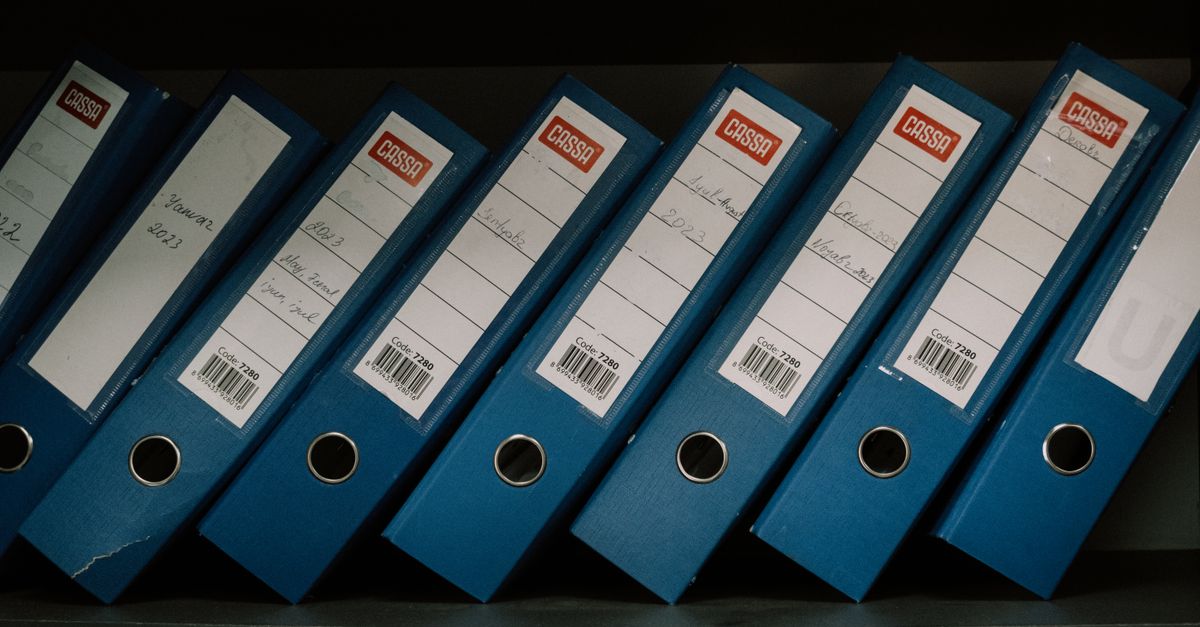
In an SME, documents are everywhere: scanned supplier invoices in a Dropbox folder, signed quotes as email attachments, client contracts in a physical filing cabinet, payslips in a password-protected HR folder. A DMS unifies all of this into a single system where every document is:
- Digitised (scan or direct import)
- Indexed with metadata (type, date, client, supplier, amount, etc.)
- Searchable instantly (full-text search + filters)
- Versioned (modification history)
- Shareable with granular access rights
- Archived with probative value if the DMS is NF Z42-013 compliant
In practice: your accountant needs the EDF invoice from October 2024? Instead of searching through 4 folders, they type "EDF October 2024" in the DMS and find it in 2 seconds.
Your accountant types "EDF October 2024": the invoice comes out in 2 seconds, instead of digging through 4 folders.
The 4 essential functions of a DMS
- Capture: digitising paper (scan + OCR to make text searchable) or direct import of digital files (PDF, Word, emails, etc.). The best DMS systems offer automatic recognition: scan an invoice, and the DMS extracts supplier, amount, date.
- Indexing: each document receives metadata (type, date, client, amount, keywords). This is what makes search powerful. Without indexing, a DMS is just a hard drive.
- Search: full-text search within document content (thanks to OCR), multi-criteria filters, alerts for specific events (e.g., "all contracts expiring in 60 days").
- Workflow: approval circuits (e.g., a quote goes through sales manager then director before sending), integrated e-signature, deadline alerts. This is what transforms a DMS from a filing cabinet into a management tool.
DMS vs. simple shared drive: what’s the difference?
A shared drive (Google Drive, Dropbox, SharePoint) stores files. A DMS structures documents.
| Criteria | Shared drive | DMS |
|---|---|---|
| Storage | ✅ | ✅ |
| Full-text search | Limited | ✅ Advanced |
| Metadata | Filename only | ✅ Multi-field |
| Approval workflow | ❌ | ✅ |
| Probative archiving | ❌ | ✅ (if compliant) |
| Granular access control | Basic | ✅ Per field/section |
| Versioning + audit trail | Limited | ✅ Complete |
| CRM/ERP connectors | ❌ | ✅ |
For an SME with 5-50 employees or handling sensitive documents (contracts, invoices, HR), switching to a DMS becomes essential.
What if a tool handled this for you?
Discover the Orizen answer: Orizen accounting software, modular and built for French SMEs.
Essai gratuit 14 jours What the Orizen accounting software module costsAnswers to the questions we get asked most.
How much does a DMS cost for SMEs?
SME DMS solutions range from €15 to €60 per user per month (cloud SaaS). On-premise solutions require an initial investment of €5-20k + maintenance. SMEs with 5-50 employees can start with a DMS integrated into their management tool (Orizen, for example, includes commercial document DMS in its Invoicing module) for €25-40/user/month.
Will DMS be mandatory for SMEs in 2026?
No, DMS is not legally mandatory in France. However, e-invoicing has been mandatory since 1 September 2026 for receiving (every business) and for issuing by large and mid-sized companies; SMEs and micro-businesses will issue by 1 September 2027 at the latest. This reform makes DMS almost essential for storing, retrieving and archiving issued and received invoices, unless your approved platform (formerly PDP) also handles that storage.
How much time do you save with a DMS?
The AIIM 2024 study reports a 30-50% time saving on document search on average for SMEs equipped with DMS. For an employee who spent 4 hours/week searching for documents, that’s 1.2 to 2 hours saved each week—60 to 100 hours per year per person, often enough to offset the DMS subscription cost within a few months.